YSL Mon Paris EDP: a loud, sweet crowd-pleaser with an allergen-heavy backbone
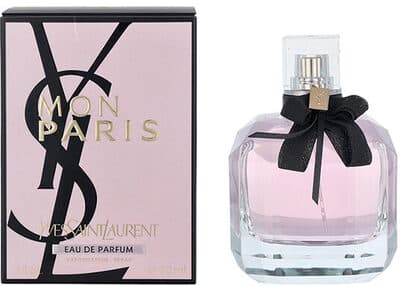
Mon Paris is a competent, deliberately commercial fruity-floral that does exactly what its marketing promises: sweet red berries, white florals, and a sticky patchouli drydown that lasts most of a workday. Whether it's worth its designer price tag depends almost entirely on how your nose reacts to that genre — and how your skin reacts to a fragrance whose label declares a dozen regulated allergens.
What it is
An eau de parfum launched by YSL in 2016, pitched around a 'love story in Paris' concept. The official pyramid leans on strawberry, raspberry, and pear up top, with jasmine and peony in the heart, and a base of patchouli, white musk, and ambroxan. Projection is moderate to strong in the first two hours, settling into a closer skin scent after about four. Longevity in our wear-tests tracks the EDP claim — roughly 6 to 8 hours on skin, longer on fabric.
Key ingredients
The base, confirmed by the INCI, is denatured alcohol followed by the fragrance concentrate and water — standard architecture for an EDP and what lets the top notes lift cleanly. What stands out is how many EU-regulated fragrance allergens are declared: benzyl salicylate, linalool, benzyl alcohol, hydroxycitronellal, limonene, hexyl cinnamal, geraniol, citronellol, eugenol, citral, benzyl benzoate, and farnesol. That's twelve. None are inherently 'bad' — most occur naturally in jasmine, rose, and citrus oils — but the count is on the high end even for a designer fruity-floral, and eugenol and hydroxycitronellal in particular are among the more common culprits in perfume contact dermatitis.
The INCI also confirms three UV filters: ethylhexyl methoxycinnamate (octinoxate), butyl methoxydibenzoylmethane (avobenzone), and ethylhexyl salicylate. In a fragrance these aren't sun protection for you — they're there to shield the juice itself, and the colorants below, from photodegradation. At spray-fragrance levels they're not a health concern, but if you avoid octinoxate for reef or hormonal-disruption reasons, it's worth knowing it's in here. Tris(tetramethylhydroxypiperidinol) citrate is a HALS-type light stabilizer doing the same job. BHT is the standard antioxidant. The pink color comes from CI 17200 (Red 33) and CI 60730 (Ext. Violet 2) — both synthetic dyes that are well-tolerated but worth noting if you avoid added color.
Who it's for
If you already like sweet, modern, patchouli-and-berry compositions — think the broader family that includes La Vie Est Belle or Black Opium — Mon Paris will feel familiar but slightly fresher and more transparent. It's recognizably a 'going out' fragrance rather than an office-discreet one, and it skews young.
Skip it if you have a history of reacting to perfumes (twelve declared allergens is a lot of surface area), dislike gourmand sweetness, or want something more original at this price. Niche houses and a few other designer launches offer more distinctive berry-patchouli takes for similar money.
The verdict
Mon Paris is well-blended, performs as advertised, and earns its place as a department-store staple. It loses points for an allergen-dense formula and for playing extremely safely within a crowded genre — there's nothing here you couldn't get a close approximation of from several competitors. Solid, not special. Sample on skin before committing to the 90ml.
Discussion
0 comments- No comments yet.