BioCare Aloe Vera is mostly water and carbomer with a splash of aloe
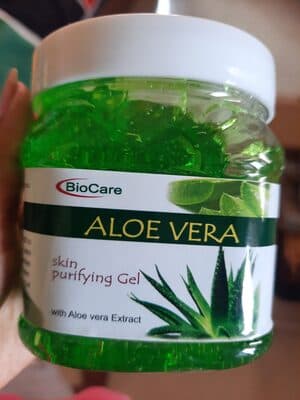
BioCare Aloe Vera is the kind of generic aloe gel that has been sold under a hundred different labels for decades, and the verified ingredient list shows why it's hard to recommend in 2024. Aloe sits fourth — after water/carbomer, glycerin, and propylene glycol — and the formula leans on fragrance, a synthetic green dye, and an older paraben blend that more careful brands abandoned years ago.
What it is
This is a leave-on aloe vera gel pitched as a soothing, hydrating treatment for irritated skin, sunburn, or post-shave use. The texture is the familiar bouncy carbomer gel that most aloe products in this price band share.
Functionally, it's a humectant gel: water and carbomer as the base, glycerin and propylene glycol doing the hydrating, a small amount of aloe, and triethanolamine to neutralize the carbomer into that signature clear jelly. That's a perfectly workable base — the problem is what's layered on top of it.
Key ingredients
Glycerin and propylene glycol are well-evidenced humectants, and between them they're doing most of the actual hydrating work. Aloe barbadensis has modest soothing and humectant data behind it, but its position on the list — fourth, just before the pH adjuster — suggests a low single-digit concentration. Not the aloe-forward formula the name implies.
The concerns stack up from there. "Perfume" is an undisclosed fragrance blend and one of the more common triggers for contact dermatitis — a strange choice in a product marketed for already-irritated skin. C.I. 61570 (Green 5) is a synthetic dye that serves a purely cosmetic role. Triethanolamine is fine as a pH adjuster in isolation but is an older choice and best avoided alongside nitrosating agents. Preservation is handled by sodium benzoate plus methyl- and isobutylparaben; isobutylparaben in particular has been banned in EU cosmetics since 2015 over endocrine-disruption concerns, and most modern formulators have moved on to phenoxyethanol-based systems. EDTA as a chelator is the one unambiguously sensible modern touch.
Who it's for, who should skip
If you want a cheap, slippery gel to layer under moisturizer and you have resilient, non-reactive skin, it will hydrate adequately. That's about the ceiling.
Skip it if you have sensitive, eczema-prone, rosacea-prone, or fragrance-reactive skin — the perfume-plus-dye combination is a poor match for the soothing use case the product is sold for. Anyone shopping in the EU or trying to avoid older parabens should also look elsewhere; the isobutylparaben alone would keep this off shelves in several markets.
The verdict
There's nothing technically broken about BioCare Aloe Vera, but the formula reads like it hasn't been reformulated in twenty years. For the same money you can get a fragrance-free, dye-free aloe gel from Holika Holika, Nature Republic, or a generic pharmacy brand — all of which put aloe higher on the list and skip the irritants. Hard to justify choosing this one.
Discussion
0 comments- No comments yet.