Vaseline's Gluta-Hya lotion is a fragranced niacinamide body moisturizer, not a brightening miracle
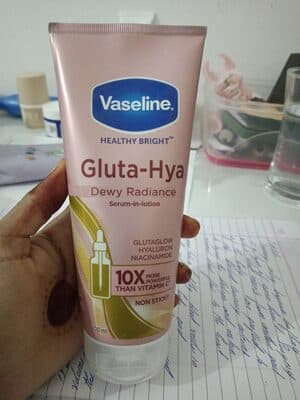
Vaseline's Gluta-Hya Dewy Radiance is marketed as a brightening body lotion built around glutathione and hyaluronic acid, sold primarily across South and Southeast Asian markets. Stripped of the marketing — including the "GlutaGlow™ technology" pitch and the "antioxidants 10x more powerful than vitamin C" line — it's a competent silicone-and-petrolatum body lotion with niacinamide doing most of the actual work, plus a fragrance load that makes it hard to recommend for sensitive skin.
What it is
This is a body lotion (the label confirms "skin lotion") manufactured in India by Hindustan Unilever, part of the regional Gluta-Hya line aimed at the brightening category that dominates drugstore shelves across Asia. The pitch is dewy, even-toned skin in five days via glutathione, cystine, and hyaluronic acid.
In practice, it functions as a mid-weight daily moisturizer. The base is water, dimethicone, and isohexadecane, which gives it the silky, fast-absorbing slip that Vaseline's newer lotions do well. Petrolatum sits further down the list — present, but not doing the heavy occlusive lifting you'd expect from a Vaseline product.
Key ingredients
Niacinamide sits fourth on the INCI list, which suggests a meaningful concentration — likely in the 2–5% range, well-supported for improving skin barrier function and reducing the appearance of hyperpigmentation over time. This is the ingredient most likely to deliver on the "radiance" claim.
Glutathione, at position six, has thin evidence for topical skin lightening. The clinical research behind glutathione and skin tone used oral or IV dosing at 250–500mg/day; topical formulations face a real stability problem because glutathione oxidizes quickly in water-based systems like this one. Cystine and glycine are amino acids that support hydration but won't independently brighten skin.
The humectant story is solid: glycerin, sodium PCA, and sodium hyaluronate are all well-established. Less welcome is the fragrance: the INCI lists a single "Perfume," but the on-pack allergen declaration (the one shoppers should actually read) names citronellol, hexyl cinnamal, limonene, linalool, and geraniol — a notable cluster of known fragrance allergens for a leave-on product. It's also preserved with methylparaben, which a 2006 study linked to increased photosensitivity with UV exposure. Daytime body lotion should be paired with SPF on exposed skin regardless, but parabens are a reasonable nudge toward that habit.
Who it's for
If you want a lightweight, non-greasy daily body lotion at drugstore pricing and you have no fragrance sensitivity, this will do the job and the niacinamide is a real bonus. The texture is genuinely nice — closer to a serum-lotion hybrid than a heavy cream.
Skip it if you have eczema, reactive skin, or a history of fragrance contact dermatitis. Also skip it if you're buying specifically for the GlutaGlow™ brightening claim — the evidence for topical glutathione isn't there, and you'd get more reliable tone-evening from a dedicated niacinamide or azelaic acid product.
The verdict
Underneath the brightening marketing, this is a perfectly fine fragranced niacinamide body lotion. The formulation isn't bad, but the named fragrance allergens and the oversold glutathione angle keep it from being a confident recommendation. CeraVe's or Eucerin's fragrance-free body lotions cost similar money and don't ask you to absorb five fragrance allergens for a brightening claim the active ingredient can't back up.
Discussion
0 comments- No comments yet.